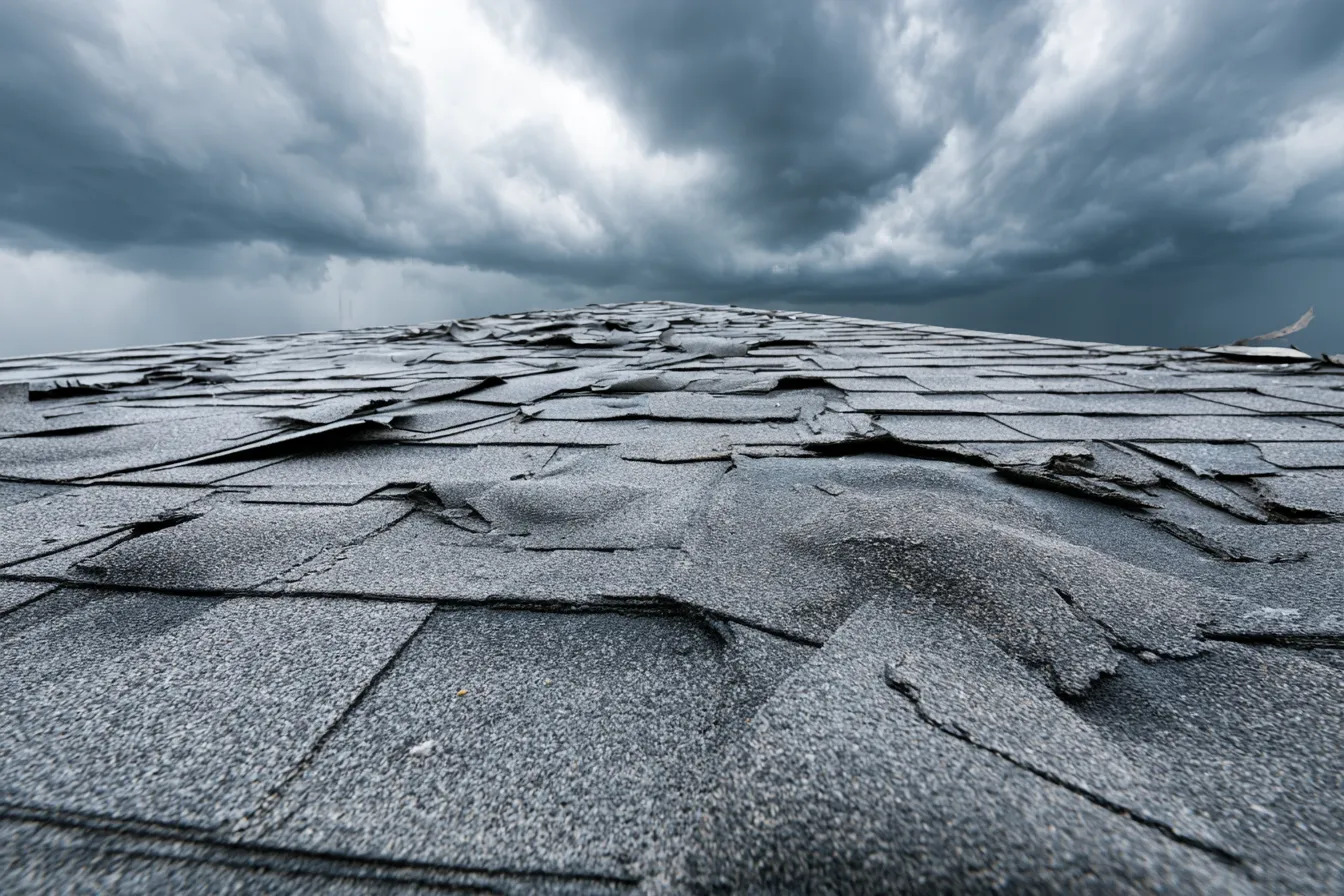
After a hailstorm rolls through Tulsa, your roof can look completely fine from the driveway and still be quietly failing up top. Here's how to catch it early, before a small problem turns into a stained ceiling.
Why hail damage hides
Hail rarely punches a clean hole in a roof. What it usually does is bruise the shingle, knock loose the protective granules, and crack the sealant, none of which you can see from the ground and none of which leaks right away. The roof keeps the rain out for months or even a year, while the damaged spots quietly wear thin.
That delay is the trap. By the time a brown ring shows up on your ceiling, the damage has been spreading since the storm, and the repair is bigger than it needed to be. Catching it early is the whole game.
What to look for from the ground
You don't need to climb up to get a first read. After a storm, walk the perimeter of your house and check the easy tells:
- Granules in the gutters or pooled at the bottom of downspouts, they look like coarse black sand.
- Dents in soft metal: gutters, downspouts, vents, and especially the metal flashing around chimneys.
- Shingles that look bruised, cracked, or are lying in the yard.
- Dings on window screens, siding, or the AC unit, if hail hit those, it hit your roof harder.
When to call for a free inspection
If you spot any of those signs, or you just know a serious storm came through, it's worth a free inspection. A roofer can get up there, document the damage with photos, and tell you honestly whether it's worth filing an insurance claim, sometimes it isn't, and a good one will say so.
One thing to keep in mind: in Oklahoma you generally have one year from the date of the storm to file a claim. So even if the roof seems fine, getting eyes on it soon keeps your options open before that window closes.